
Burgundy’s Varietals
The vineyards of the Bourgogne region are home to some celebrated varietals. With more than 80% planted with Chardonnay and Pinot Noir, the Bourgogne winegrowing region is also a showcase for Gamay and Aligoté.
Find out about the varietals grown in the Bourgogne winegrowing region before savoring your favorite wines.
The Bourgogne winegrowing region is home to some very old varietals. The region provides ideal weather conditions and a terroir perfectly suited to bringing out their very best.
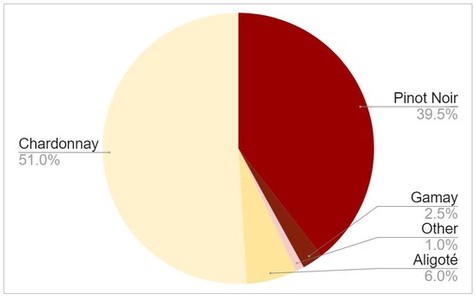
Bourgogne’s winegrowers favor four varietals:
- Chardonnay (white), accounting for 51% of land under vine
- Pinot Noir (red), with 39.5%
- Gamay (red) and Aligoté (white), accounting for 2.5% and 6% respectively
- Sauvignon, César, Pinot Beurot, Sacy, Melon, and other minor varietals make up the remaining 1%
In the Bourgogne region, wines are mainly single varietal. This “purity of expression” allows each plot and vintage to express its own personality and unique characteristics.
Chardonnay and Pinot Noir, the ultimate references in Bourgogne, have become wines with uniquely expressive aromatic profiles, evoking flowers, fruit, and spices.
Bourgogne wines span a full range of colors:
- White wines (62%) and Crémant de Bourgogne (8%) range from pale yellow to deep gold, with green, straw, amber, and orange hues
- Red wines (29%) range from cherry and bright red to mahogany and brick
- Rosé wines (1%) range from violet to grey-pink, including raspberry, orange, and salmon tones
Pinot Noir vines were likely brought to the region during the Roman era and went on to establish the reputation of Burgundy’s great red wines.
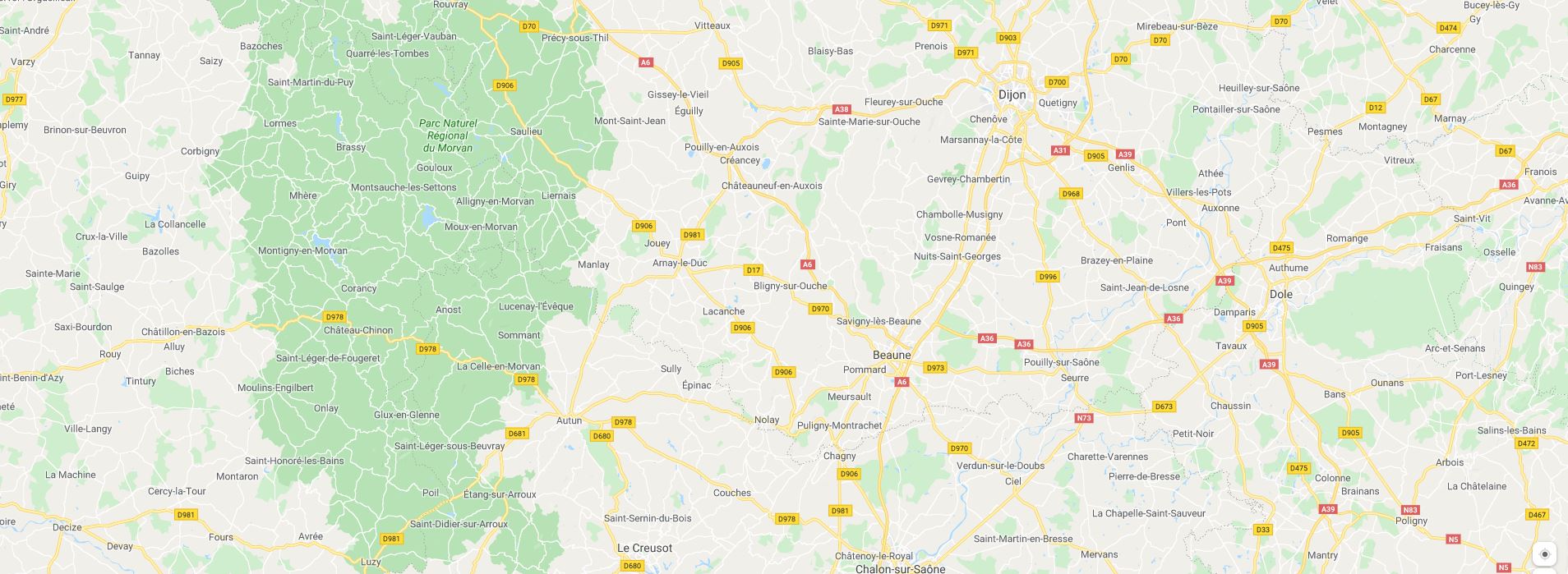
Cultivated by locals for centuries, Chardonnay is responsible for the reputation of the great white wines of the Côte de Beaune, Côte Chalonnaise, Mâconnais, and Chablis.
Gamay, another ancient varietal, takes its name from a hamlet in Saint-Aubin near Puligny-Montrachet. It is widely used in the Mâconnais and in blends for Coteaux Bourguignons, Bourgogne Passe-Tout-Grains, and some Crémant de Bourgogne.
Aligoté is another historic varietal, often planted where Pinot Noir and Chardonnay are less suited. It is used to produce Bourgogne Aligoté (a regional AOC) and may also be used in Crémant de Bourgogne .
In the Auxerrois, lesser-known varietals such as Sauvignon and César appear. Sauvignon produces the light, fruity Saint-Bris, while César lends structure and length to red wines from Irancy.
Some winemakers continue to defend Pinot Beurot (Pinot Gris), a varietal likely native to Burgundy but now almost extinct locally.
Did you know: Pinot Noir juice is clear. Its red color comes from maceration with the skins. Without it, Pinot Noir would produce a white wine, as in Crémant de Bourgogne Blanc de Noirs.
Next, read about Chardonnay, Pinot Noir, Aligoté, and Gamay.