
Gamay
Burgundy’s “other” red grape, Gamay, is not as well known as Pinot Noir, but it is equally important to Burgundian history and culture. If you have enjoyed the light, fruity, slightly acidic wines of Beaujolais, then you have already experienced Gamay. Arriving in the region in the 14th century, it endured centuries of criticism yet remains deeply rooted in southern Burgundy.
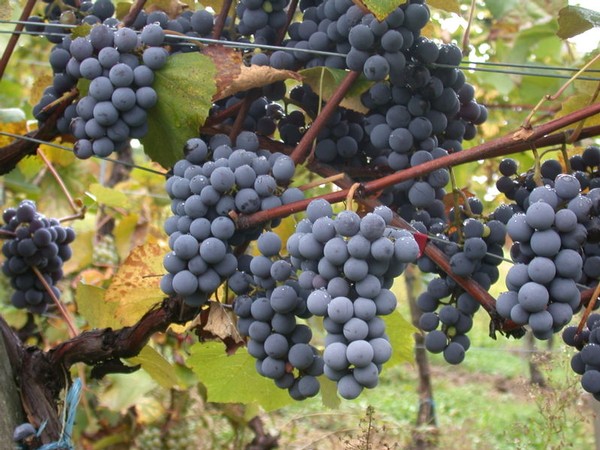
Gamay vines do not grow as vigorously as some other varieties and require careful management to maintain quality throughout the season. Unlike Pinot Noir, Gamay prefers granite-based, acidic soils. It buds early, making it vulnerable to spring frosts, and is also prone to millerandage, which can result in uneven grape development.
Wines made from Gamay have not always enjoyed the best reputation, sometimes deserved and sometimes not. Beaujolais Nouveau, in particular, developed a mixed image over time, though significant improvements in quality have been made in recent decades.
Those seeking depth should explore the ten Crus of Beaujolais, distinct from Beaujolais and Beaujolais-Villages. From north to south, they are Saint-Amour, Juliénas, Chénas, Moulin-à-Vent, Fleurie, Chiroubles, Morgon, Régnié, Côte de Brouilly, and Brouilly.
Gamay is also cultivated farther north in Burgundy, particularly in the Mâconnais, where most Mâcon Rouge is based on this grape. France remains the world’s largest producer of Gamay, though it is also found in Switzerland, the United States, and Canada, often blended with Pinot Noir.
The color: Gamay wines are deeply colored, ranging from ruby to purple depending on the cru and vintage.
On the nose: Expect a vibrant aromatic spectrum, from cherry, plum, and raspberry to floral notes such as violet, iris, and peony. A large bowl-shaped glass helps capture this expressive profile.
On the palate: These are wines of high acidity—sometimes tart, always refreshing. Some crus offer surprising depth and complexity. Each cru expresses its own personality, from the elegance of Côte de Brouilly to the power of Morgon and the earthiness of Juliénas. Gamay can also be lightly chilled in summer and pairs beautifully with charcuterie, cold meats, and mild white cheeses, making it an excellent picnic wine.
Did you know: Gamay’s history in Burgundy has been turbulent. In 1395, Philip the Bold ordered the “base and unfaithful Gamay” removed from Burgundy’s finest vineyards. Despite this, the grape thrived in Beaujolais and survived centuries of marginalization before finally gaining official recognition in 1937 with a Protected Designation of Origin.