
Bourgogne Côtes du Couchois: The Next Coming of Age at Burgundy’s Hook
Burgundy’s evolution has never been linear. Its reputation has advanced in quiet waves, often beginning in places once dismissed as rustic or peripheral before being reassessed through the lens of serious viticulture and a deeper understanding of geology. In recent decades, Santenay made that journey first, followed by Maranges. Today, attention is turning just a little further west, to Côtes du Couchois—an appellation poised at the very point of what we like to call the Hook of Burgundy.
This subtle bend in Burgundy’s geography marks more than a cartographic curiosity. It represents a geological and cultural threshold, where the lessons learned in neighboring appellations are now being applied with growing confidence. The wines emerging from the Couchois today suggest that its moment has arrived.
The Hook of Burgundy: A Geological Pivot
To understand the Côtes du Couchois, one must first understand where it sits. Burgundy runs south from Dijon in a narrow ribbon through the Côte de Nuits and Côte de Beaune. Past Santenay and Maranges, that ribbon bends westward before flicking back north—forming a shape remarkably like a fish hook.
This point of inflection is the Hook of Burgundy, and it is here that the Couchois lies. Geologically, this is a place of convergence: limestone remains dominant, but altitude, exposure, and soil composition begin to shift. The result is a zone capable of producing wines with structure and freshness rather than overt richness—qualities increasingly prized in modern Burgundy.
Historically, this area was overlooked. Wines were often robust, sometimes rustic, and frequently blended into broader Bourgogne categories. But as with Santenay and Maranges before it, improved farming, lower yields, and more attentive cellar work have transformed what these vineyards are capable of delivering.
From Rustic to Refined: A Familiar Burgundian Pattern
The trajectory of the Couchois mirrors that of its neighbors. Santenay, once known primarily for sturdy reds and mineral whites, has over the past two decades gained recognition for its precision and aging potential. Maranges, long regarded as an outpost, followed with a new generation of growers revealing clarity and finesse that few had anticipated.
Now, the Côtes du Couchois is following the same path—perhaps more quietly, but with equal conviction. What distinguishes the Couchois is its combination of serious geology and relative anonymity. Prices remain grounded, speculation minimal, and growers focused on farming rather than fashion.
Whites First: Where the Couchois Truly Shines
While Pinot Noir has dominated much of the conversation around the Couchois, it is increasingly clear that white wines are revealing themselves to sit right alongside as a pure expression of this terroir. Chardonnay also thrives here, benefiting from cooler nights, limestone-rich soils, and exposures that favor tension over opulence.
These conditions allow for whites of mineral clarity, measured ripeness, and natural balance—wines that feel aligned with the direction Burgundy itself is moving. As climate patterns evolve, such sites are becoming not just interesting, but essential.
It is precisely this potential that drew attention to the area when new vineyards began to be planted with intention rather than habit.
Domaine de Cromey and the Choice of Place
Domaine de Cromey sits within the Couchois, at the heart of the Hook of Burgundy. Its presence here is not incidental. The decision to establish a vineyard on this site—known as Le Clos—was driven by geology rather than reputation.
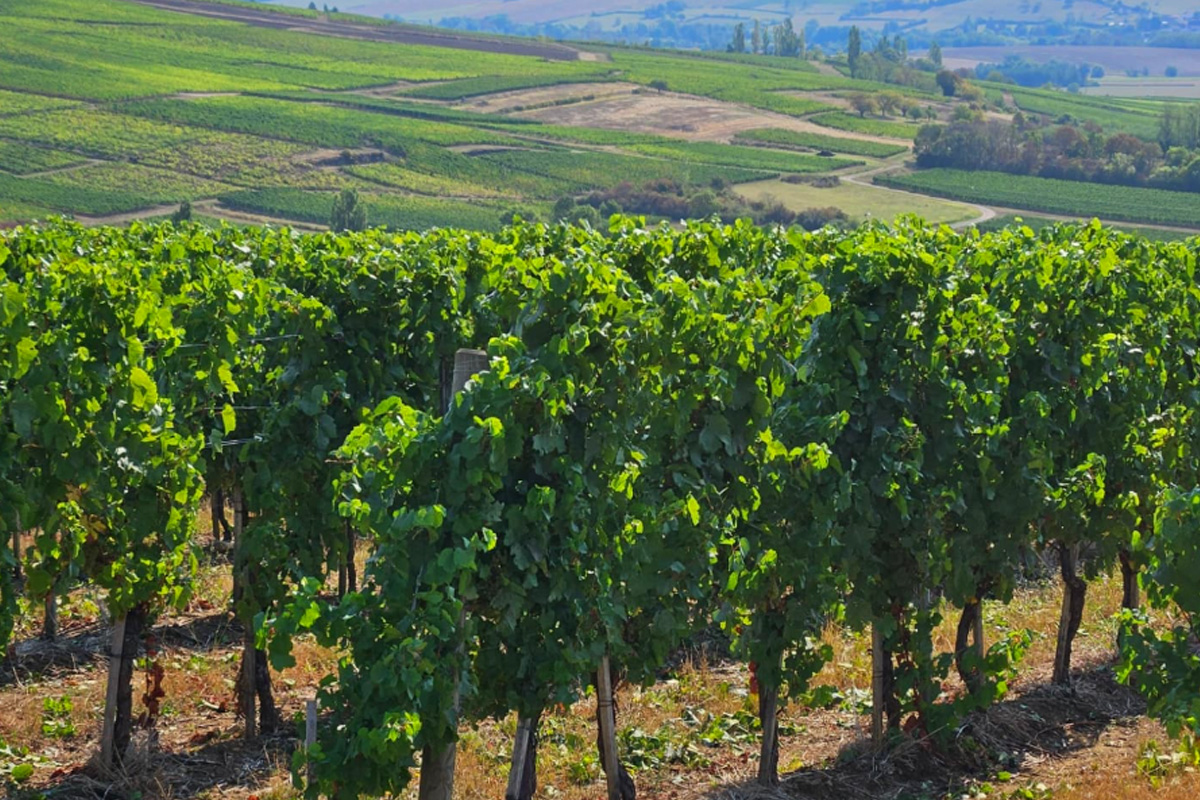
Le Clos is predominantly planted to Chardonnay, with a smaller proportion of Pinot Noir. The vines are still young, approximately eight years old, but they are rooted in virgin soils that had never been sprayed or chemically treated. From the outset, the aim was to allow the land to express itself with minimal intervention, relying on healthy soils and restrained winemaking.
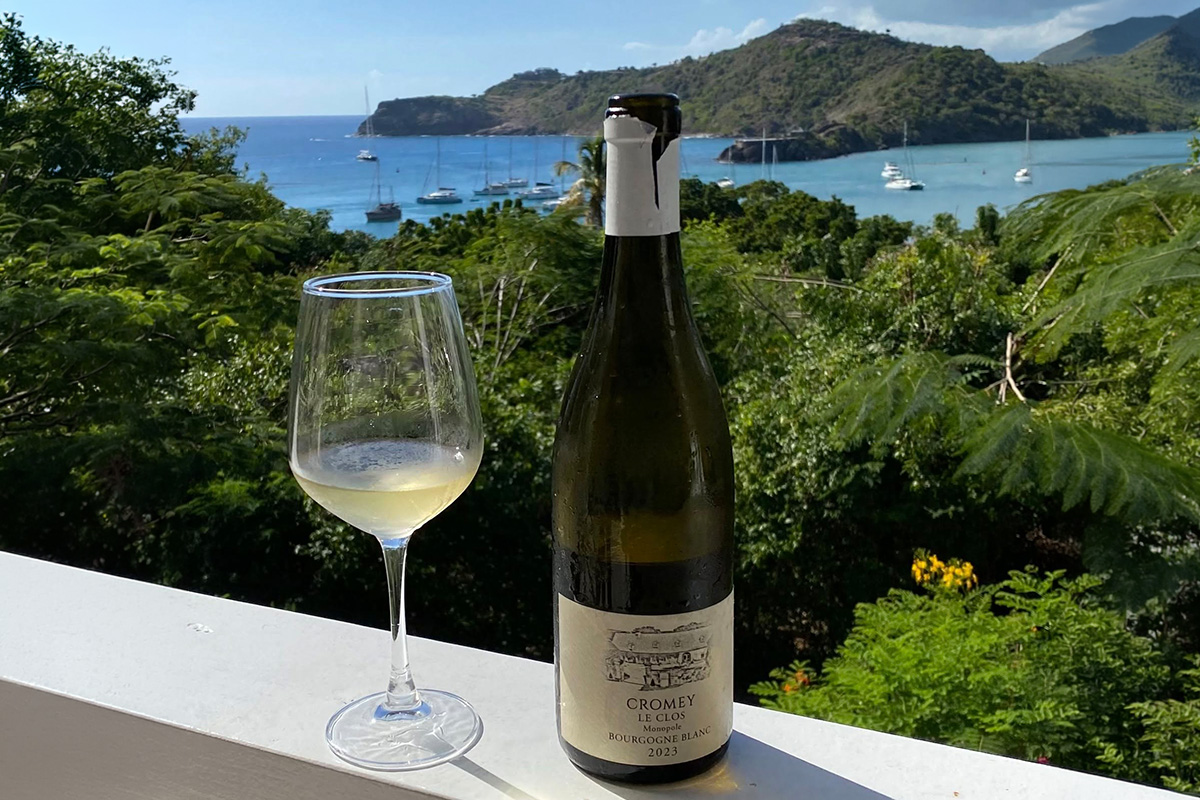
The first vintages of Bourgogne Blanc Le Clos already point clearly to the strengths of the Couchois: freshness, structure, and a mineral line that anchors the wine. These are not wines chasing immediacy. They are wines built on balance, with the capacity to evolve.
A small amount of Pinot Noir Le Clos complements the whites, offering a darker, earth-inflected expression typical of the appellation, but even here, restraint and clarity take precedence over extraction.
A New Generation, A Clear Direction
The progress seen in the Couchois today is inseparable from the people working its vineyards. Partnerships with thoughtful growers—such as collaboration with our local grower Domaine Ami, known for its organic and biodynamic approach in nearby Maranges—reflect a shared belief in patience, precision, and place.
This is not an appellation attempting to imitate its more famous neighbors. Instead, it is refining its own voice, informed by lessons learned just down the road in Santenay and Maranges.
Couchois at the Threshold
What makes the Bourgogne Côtes du Couchois compelling today is that it feels like an appellation at the threshold rather than the peak of its reputation. The quality is there, the direction is clear, and yet the wines remain accessible—both intellectually and financially.
As Burgundy continues to reward those who look beyond the obvious, the Couchois stands as a reminder that the region’s future often emerges from its margins. At the point of the Hook of Burgundy, where geology, history, and renewed intent converge, a new chapter is quietly taking shape.