
Michelin Launches 2026 Grape Guide, But Wine Palates are Uniquely Personal
The world of wine is increasingly obsessed with numbers. We are bombarded with rigid point scales, algorithmic recommendations, and sterile grading systems that try to flatten wine into a neat mathematical metric. But step onto the ancient, chalky soils of the Côte d’Or, for example, and you enter a realm that utterly defies this industrialised logic.
Here, at burgundywine.com, our raison d’être is entirely different. We don’t buy wine based on standard scores, and we don’t expect you to drink it that way either. We believe the true magic of an exceptional wine from Burgundy cannot be quantified. It is found in the quirks, the rich history, and the deeply ingrained passion of small-production, artisanal winemakers whose knowledge of these exact rows of soil has been passed down through generations.
That doesn’t mean ignoring the science behind a great bottle. It means recognising that the best way to appreciate Burgundy draws on both: the precision of the winemaking, and the part that simply can’t be measured. Here’s why we think looking past the mainstream critics matters — and why we’re well placed to help you find your way through it.
The Illusion of the Perfect Score: Beyond a Michelin Guide in Burgundy
For decades, the wine trade has taken its cue from a handful of major wine critics and sommeliers, above all Robert Parker and his 100-point scale. Publications like The Wine Advocate, Wine Spectator and James Suckling built a culture where a single score could decide a domaine’s place on the world’s most renowned wine lists.
Even the Michelin Guide has moved further into this world, acquiring The Wine Advocate outright. That expansion becomes official on 7 July 2026, when the Michelin Guide unveils its inaugural wine selection — a new system, a new chapter, and effectively a Burgundy wine Michelin guide of its own. Michelin Inspectors are focusing on three of the region’s most storied stretches to start: Côte de Beaune, Côte de Nuits and Côte Chalonnaise, spanning the Côte-d’Or and Saône-et-Loire départements. The event itself takes place in Dijon, where the new MICHELIN Grape accolade will be awarded in tiers of one, two or three grapes, designed to guide wine lovers toward the finest wine estates in each area. It is a genuinely new reference point for anyone trying to navigate Burgundy wine quality from outside.
These publications serve a purpose, and there is real value in commercial consistency. But a numerical score treats a wine as fixed — judged once, then filed away. Burgundy does not sit still like that. A bottle opened at three years old and the same bottle opened at fifteen can be almost unrecognisable as the same wine.
A young red might taste tight and austere on release, with tannins firm enough to put off a critic looking for something immediately impressive. Given a few years in a cool cellar, those tannins soften considerably, and the primary fruit gives way to something more complex: truffle, forest floor, dried flowers. A single score, given once on release, misses most of that story.
Step away from the scorecard and you stop chasing the same heavily extracted ‘house style’ that so many wines were built to please a handful of well-known palates, including Robert Parker’s, or the checklist of international raters more broadly. Instead, you start noticing the small, sometimes uneven differences that come from a domaine whose entire year’s output might fill only a few barrels.
The Science: Micro-Terroir and Minimal Intervention
Skipping the 100-point scale doesn’t mean skipping precision. If anything, Burgundian winemaking is one of the more exacting sciences of place you’ll find anywhere in wine. The AOC system was built to map geology in real detail — more detail than most wine regions ever attempt. Take a climat in Chablis and one in the Côte Chalonnaise: barely 100 kilometres apart, yet they can behave like entirely different places.
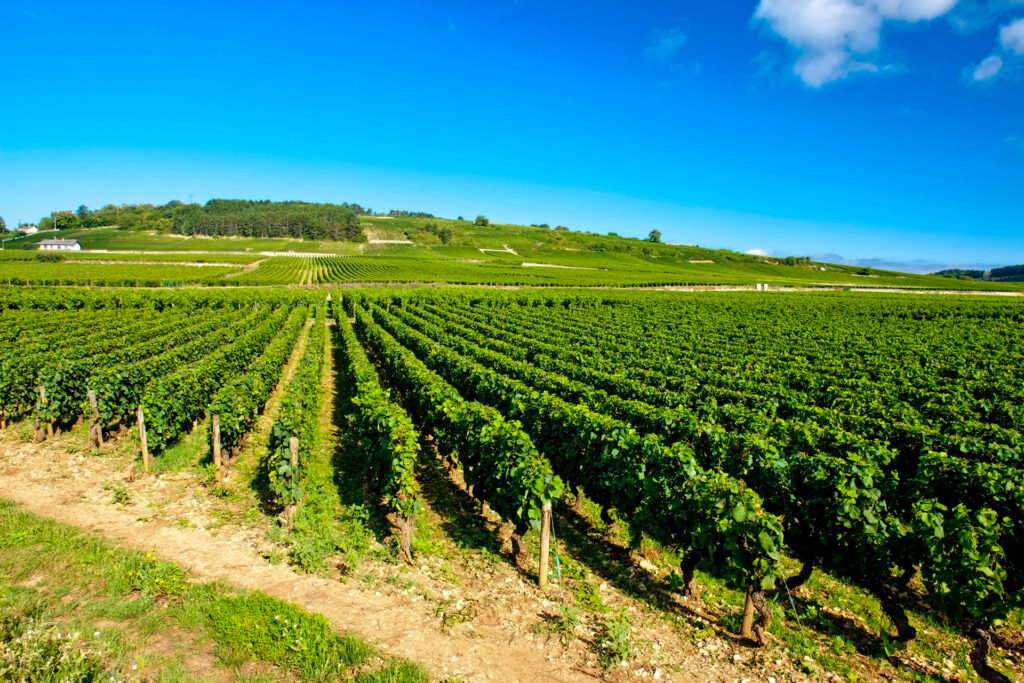
Walk the dirt track that runs through Gevrey-Chambertin and you will find a Grand Cru vineyard on one side and a simple Village plot on the other, sharing the same sun and the same weather. What changes is underfoot: water-retaining clay gives way to free-draining, ancient limestone, and that shift alone is enough to change how the vine takes up nutrients.
Because Burgundy relies almost entirely on two grapes — Pinot Noir for red, Chardonnay for white — there is nowhere for the soil to hide. Whatever the ground is doing shows up directly in the glass. Vignerons from Burgundy’s exceptional wine estates work hard to keep it that way, largely by staying out of the wine’s way wherever they can:
- Hand-Sorting: Grapes are picked and sorted by hand, parcel by parcel, so stems and leaves do not find their way into the fermentation.
- Cold Maceration: Juice, skins and seeds are left to soak gently before fermentation, drawing out flavour and tannin at their own pace rather than forcing it with heat.
- Patience in the Cellar: Gentle pneumatic pressing and unhurried oak ageing, handled carefully enough that the wine’s own minerality comes through instead of being buried under oak spice.
Handled this way, a vintage is left to show what it actually was, rather than what the cellar decided to make of it.
For Burgundy Wine, Trust burgundywine.com
The ultimate challenge of Burgundy is its fragmentation. Napoleonic inheritance laws mean a single vineyard can be divided among dozens of cousins. Either you play it safe and buy based purely on Michelin recommendations or Robert Parker points—purchasing from the same massive, centrally controlled corporate brands as everyone else—or you risk your budget on the unknown.
This is exactly why we are here. We are not a corporate algorithm or an industrial warehouse; we are an on-the-ground curator, offering wine enthusiasts a trusted reference point across all Burgundy’s renowned wine regions.
- Decades of Local Footprints: We have spent decades living and working in the Burgundy region, getting under the skin of the place. We don’t read spreadsheets; we walk the cellars and hold the door open for you to step inside.
- True Relationships Over Chequebooks: Over many years, we have learned that small, independent vignerons value enthusiasm, shared philosophy, and loyalty far more than a corporate chequebook. Because of this, we have unparalleled access to hidden gems, “garagiste” masters, and rising generational talents who refuse to compromise their heritage.
- The Curator’s Promise: Our process is fiercely selective. We don’t impart a style onto the region; we look for honest, sustainable winemakers—like those practicing organic or biodynamic viticulture—and give them a voice beyond France’s borders.
We do the heavy lifting of sorting through variable vintages and tiny plots so you can buy with total confidence, knowing that every bottle delivers exceptional value and genuine soul.
Engaging Your Senses: Getting Under the Skin of a Grape
When you sit down with a bottle of authentic Burgundy, we invite you to step away from the scorecard and trust your own palate. Get to know the grape and how it behaves across years, domaines and regions.
Start with the Eye. Pour the wine into a proper, broad-bowled glass to let the aromas expand. Observe the “robe”—the brilliant ruby of an unclassified Pinot Noir or the greeny-gold shard of light from a fine white wine. Watch the slow “legs” run down the glass, hinting at its natural alcohol and structural balance.
Then there’s the nose. Give it a moment — swirl, breathe in, breathe in again. You’re not trying to tick off a checklist of flavours; you’re picking up on what that year’s weather and soil actually did to the grapes. Depending on the bottle, that might mean crisp apple, wild cherry, a touch of liquorice, or the flinty minerality that only limestone can give a wine.
That is what turns drinking wine into something closer to a genuine interest than an exercise in comparison. Skip the scorecard, ask about the vintage and the hands behind it, and pay attention to what is actually in the glass — that is usually where the more interesting answer is. Once you can pick that apart, food and wine pairings start to make a lot more intuitive sense too, because you are matching what is actually in the glass rather than what the label says should be there.