
An appellation devoted entirely to white Burgundy
In a region famous for Pinot Noir, Montagny stands apart. This is the only appellation in Burgundy dedicated exclusively to white wine, and it sits at the very southern edge of the Côte Chalonnaise, where limestone hills soften, valleys open, and Chardonnay finds a slightly gentler, more generous voice.
Montagny does not shout. It does not trade on grand names or historic crus. Instead, it offers something increasingly rare in Burgundy today: clarity of purpose. Chardonnay grown on limestone and marl, shaped by exposure and elevation, and vinified to express freshness, balance, and place rather than excess.
For American Burgundy drinkers, Montagny often arrives as a discovery. For those who return to it, it becomes a quiet habit.
Where Montagny fits in Burgundy
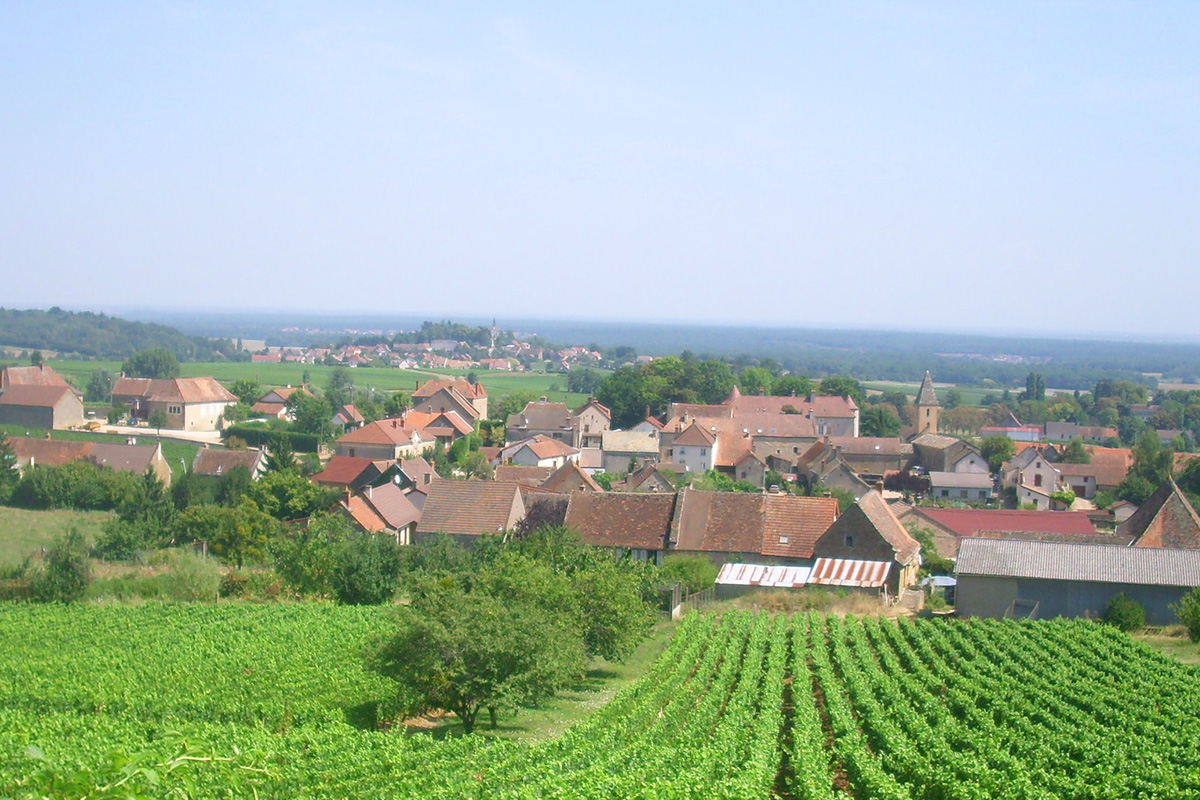
Geographically, Montagny lies just south of Mercurey, in a landscape of rolling slopes and cooler exposures that favour white wine. The appellation is composed almost entirely of Premier Cru vineyards, a unique distinction that reflects the consistency of its sites rather than a rigid hierarchy.
What Montagny lacks in fame, it makes up for in coherence. The wines tend to share a family resemblance:
- citrus and orchard fruit rather than tropical notes
- a chalky, saline finish
- moderate alcohol
- and a structural line that makes them as satisfying at the table as they are on their own
Montagny is not trying to be Meursault or Puligny-Montrachet. It is doing something different, and doing it well.
Style: purity over power
The best Montagny wines emphasise purity and frankness. They are white Burgundies that feel composed rather than constructed, with fruit kept in check by acidity and minerality.
In youth, Montagny often shows lemon zest, white flowers, and fresh apple. With time, those notes broaden into subtle nuttiness and stone while retaining a refreshing core. These are wines that reward a few years in bottle, but never demand decades of patience.
For many Burgundy lovers, Montagny becomes a reference point: this is what restrained, site-driven Chardonnay tastes like when nothing is forced.
Montagny and the idea of terroir
Montagny is an appellation where the concept of terroir still feels tangible rather than abstract. Vineyards are small. Farming decisions matter. Winemaking choices show clearly in the glass.
That is why Montagny has long attracted growers who prefer instinct over prescription, vignerons who believe that each parcel should speak for itself, and that restraint is not a limitation but a discipline.
It is also why Montagny pairs so naturally with producers who think in generations rather than trends.
Cary Potet and the return of a Montagny name
One of the most evocative Montagny stories belongs to Château Cary Potet.
For us, Cary Potet is inseparable from early encounters with Burgundy, discovered years ago through wines that were at once luscious and grounded, and through a vigneron whose presence felt drawn from another era. When those wines disappeared from view, it felt as though a small but meaningful chapter of Montagny had quietly closed.
And then, unexpectedly, it reopened.
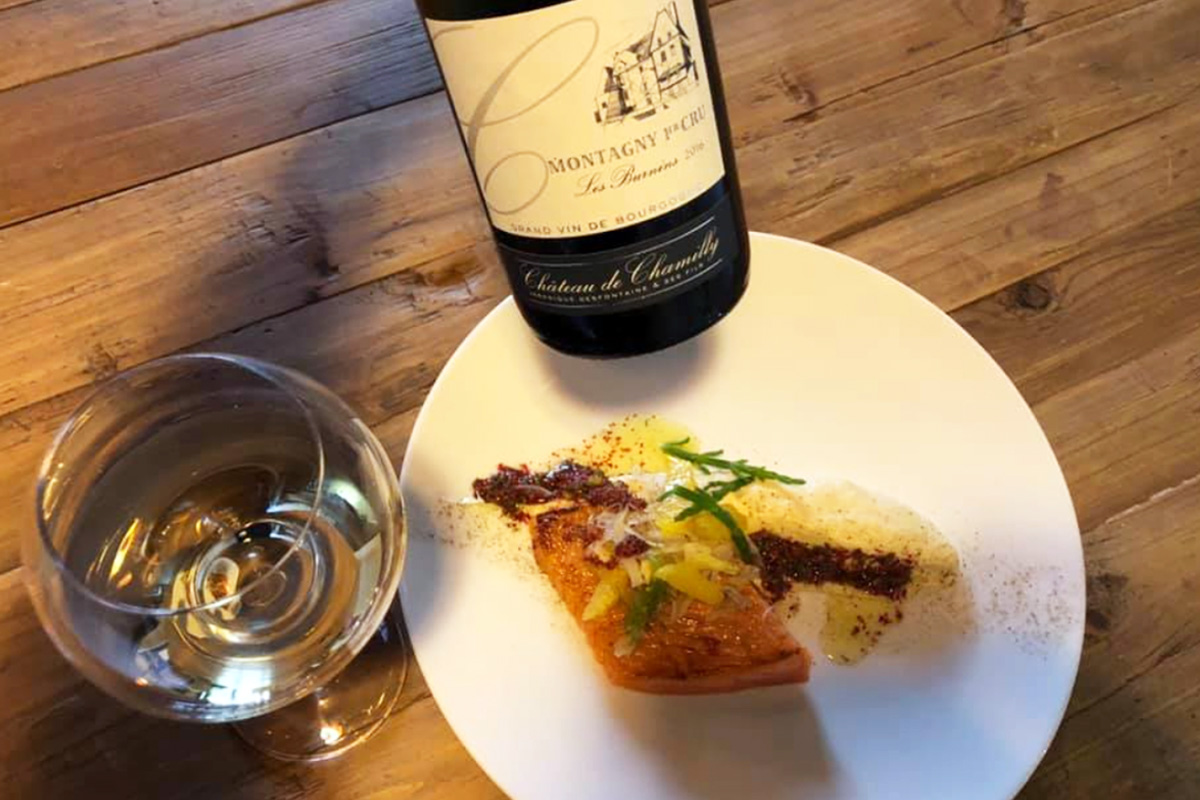
Today, Cary Potet is once again part of the Montagny landscape, with its wines now produced by the historic Château de Chamilly, a 17th-century estate in the northern Côte Chalonnaise with deep roots in the region. The continuity is not cosmetic. It is philosophical.
Château de Chamilly and modern Montagny
Under the stewardship of the Desfontaine family, today represented by Xavier, Arnaud, and their mother Véronique, Château de Chamilly approaches Montagny with a guiding principle: nothing comes from nothing.
Their work in the vineyards is pragmatic rather than doctrinaire. They avoid rigid certification in favour of observation, believing that each vineyard demands its own response. Harvest is done by hand, with careful sorting, and the wines are raised patiently, typically for 18 months, split between French oak and time resting together in tank, allowing the elements to knit together.
The goal is not to imprint a style, but to allow Montagny’s natural balance to emerge:
- Chardonnay that is pure and frank
- oak used as seasoning, not structure
- texture developed through time, not manipulation
In this context, Cary Potet’s Montagny feels less like a revival and more like a restoration.
Why Montagny matters today
As prices climb across Burgundy, Montagny has quietly become one of the region’s most reliable sources of authentic white Burgundy, wines that speak clearly of place without demanding grand cru budgets.
For collectors, Montagny offers perspective.
For everyday Burgundy drinkers, it offers consistency.
For the table, it offers versatility: shellfish, roast chicken, vegetables, soft cheeses, and simply prepared fish all find a natural partner here.
Montagny is not an alternative to the Côte de Beaune. It is a reminder that Burgundy’s depth does not run in a single line.
A closing thought
Montagny asks for attention, not reverence.
It rewards patience, not speculation.
In wines like Cary Potet, now once again anchored in their home landscape, Montagny shows exactly why Burgundy remains endlessly compelling, not because of hierarchy alone, but because of places that continue to speak when allowed to do so.
If you know Montagny, you tend to keep it close.
If you don’t, this is a very good place to start.